Locator
JO21SS
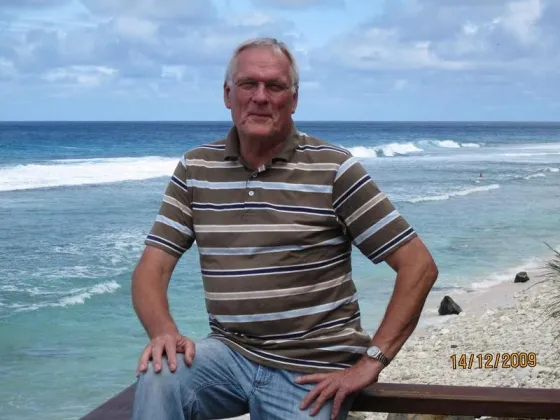
PE3TA Dutch radio amateur whose callsign, with that quiet little zero in PA0, tells you the licence has been on the wall for a long time. Vintage prefix, modern operator.
Wil holds a full Class A/F licence and has been on the air since 1971. He operates from Oss, North Brabant, locator JO21SS. The PA0-series prefix dates from the era when Dutch amateur calls actually had a region digit. New PA0 calls haven't been issued in decades.
Public Club Log records show 63,638 QSOs logged for PA0BWL between 16 July 1971 and 30 August 2018, the partial public footprint of more than half a century behind a key. He describes himself in a Bavarian Contest Club new-member entry as an "avid country collector": DXCC, in the long view.
Active member of VERON (Vereniging voor Experimenteel Radio Onderzoek in Nederland), serves on the PACCdigi commission, and contributes regularly to PA6HQ, the VERON's IARU HF Championship team, with antenna and station-build work.
Long-time member of PI4OSS, the Oss-region radio club, and former chairman: the qsl.net/pi4oss antenna-analyser write-up from the 2000s refers to him as "onze voorzitter Wil PA0BWL", and a 2007 PI4OSS clubavond page records him opening the meeting. The chair has since passed on; the current PI4OSS voorzitter is PA2AZ. Member of the Bavarian Contest Club since 2010, where the new-member profile lists CW as preferred mode and 40m as favourite band.
Two domestic Dutch calls, plus expedition calls collected on the road. Each tells a slightly different story about how he likes to operate.
PA0BWL, the primary home call. Class A/F, full HF privileges. The PA-zero prefix dates from the early decades of Dutch licensing. You don't pick this one up at a hamfest.PE3T, a second domestic call. Short, easy on a key. Most often used for digital-mode contests and PA6HQ team operations.During the round-the-world DXpedition with Claudia PA3LEO and Gerd DJ5IW (the contact through which Wil later joined the Bavarian Contest Club), the team rotated through location-specific calls so the EU pile-ups could clearly hear which entity / band / mode they were chasing.
5W0WL, Samoa. Operations from Upolu.A31WL, Tonga. Tongatapu base, classic CW/SSB/RTTY rotation.E51BWL, South Cook Islands. The Rarotonga station, where the QRZ profile photo still comes from.ZL/PA0BWL, New Zealand. Waiheke Island and Auckland transit, with opportunistic operating.W6/PA0BWL, United States. A US west-coast portable stretch on the same trip.9V, Singapore. Final stop on the way home.PE55TEX, Texel Island, EU-038. 2023 RSGB IOTA Contest with an international team, see the Expeditions tab.LX7I, Luxembourg. Guest op for ARRL DX CW 2012 Multi-Single, see the Expeditions tab.PI4OSS, club call from Oss. Used by Wil for special LF activity in 2000 and 2003 from a windmill on 137 kHz, see the LF · 136 kHz tab.PA6HQ, VERON HQ call. Annual IARU HF Championship team, see the Contesting tab.Dutch amateurs may hold a vintage PA0 alongside a modern second call. Useful for keeping contest entries clean, separating digital-mode logs, or just for the joy of it. PE3T is faster on a CW key, one extra advantage when the band gets crowded.
Two big trips on the public record: a round-the-world South Pacific run in 2009, and a 2023 IOTA contest activation from Texel Island. Different scales, different climates, both involving suitcases full of feedline.
A round-the-world DXpedition with Claudia PA3LEO: Samoa, Tonga, the South Cook Islands, New Zealand, US west coast, Singapore. Six weeks on the road. CW, SSB and RTTY. Thirty-five thousand-plus QSOs in the log.
Wil was newly retired in 2009 when the trip was being planned. He phoned IK1PMR while on a walk through Amsterdam, hoping to do his first international DXpedition. He was in.
Pre-departure, Wil and Kenneth (OZ1IKY) handled most of the antenna work, building and bench-testing the team's complete wire-antenna kit in Holland, then shipping it. The kind of unglamorous prep that decides the difference between 35k QSOs in the log and a frustrating month of mismatched feedlines under a tropical sun.
From Rarotonga the team ran European pile-ups on 80m, 40m, and 30m simultaneously. Band combination dictated by the sunrise/sunset propagation paths back to EU. Wil rotated through operating positions while the rest of the team kept the parallel pile-ups alive.
IK1PMR, placed during a walk through Amsterdam.OZ1IKY: the team's complete wire-antenna kit, built at home, then prepared for shipping to the Pacific.The trip was announced in 425 DX News bulletin 1679 and written up by the BARTG as "Pacific DXpedition 2009, A Round-The-World trip"; the 5W0WL QRZ entry confirms QSL-via PA3LEO with the page managed by PA0BWL.
A different kind of trip: not chasing entities, but joining a top-flight contest station for a weekend of pile-ups from a hilltop in north Luxembourg.
LX2A · Philippe, station owner; QSL route runs via him.DF1LON · LarsDF9TS · GerdDJ7JC · Norbert (also on the 2009 Pacific team).PA0BWL · WilLX7I is the contest call of the multi-band station at Eschdorf, north Luxembourg, run by LX2AJ and established in July 2002. The 2012 ARRL DX CW Contest entry was a Multi-Single, with QSL via LX2A. Announced in OPDX Bulletin 1049 (13 Feb 2012).
Special-event call, island activation, contest format. The 2023 RSGB IOTA Contest from Texel Island (EU-038) brought together a small international team for a weekend of pile-ups and salt air.
PE3T · Wil, host op from the NL side.DJ4MH · MarcoDK2CL · ChrisDK5KK · KoljaDK8ZZ · ZikThe published RSGB IOTA Contest 2023 results put PE55TEX 6th overall in the Multi-Two Low-Power category with 7,166,860 points · 2,205 QSOs · 394 multipliers, running 100 W. The team's soapbox entry: "What a great weekend! Our team (PE3T, DJ4MH, DK2CL, DK5KK and DK8ZZ) did a good effort from Texel Island."
Operating site near De Cocksdorp on the northern tip of Texel, the largest of the Wadden islands. The location placed the team well inside IOTA EU-038 and gave them clean horizons for the contest weekend. Announced in 425 DX News bulletin 1679 (8 July 2023); listed on NG3K's announced-IOTA-operations page; the result later appeared in the RSGB IOTA Contest 2023 published scores.
QSL handling per the announcement: LoTW, bureau, and eQSL all accepted.
IOTA, Islands On The Air, turns geography into the multiplier. From the chasing side it's a way to work rare island groups; from the activating side it's the satisfying combination of a portable build, a contesting weekend, and a piece of land that wouldn't otherwise be on most logs.
DX-cluster archives at DXHeat additionally record portable spots not tied to a published expedition writeup:
CT9/PA0BWL, Madeira. Multiple cluster spots, dates not collected in a single writeup.OK/PA0BWL, Czech Republic. Cluster spots from a portable visit.PA0BWL/P, June 2017. Five cluster spots from a domestic portable run.No team or write-up is publicly tied to these. They're cluster-archive confirmation that the call was on air from those locations, the working-amateur footprint of an operator who travels with an antenna.
A part of the hobby that doesn't show up on a worked-all-states map. On 137 kHz the wavelength is over two kilometres, practical antennas are always a compromise, signals are weak, and every dB you scrape together is hard-won. PA0BWL's name shows up in international LF archives from the early 2000s onward.
One of the more memorable signatures: in 2000 and again in 2003, PI4OSS operated on the 137 kHz amateur LF band using a windmill as antenna support, from locator JO21SS. Both activities were posted to the international RSGB-LF mailing list and are referenced in the longwave operator notes of DK8KW. The windmill is the kind of antenna support you only justify if you're serious about putting a workable signal onto a band where the wavelength is two kilometres long.
The GW4ALG 136 kHz station pages list early-period 137 kHz QSOs from PA0BWL with G3KEV, G3YXM, G4GVC, ON6ND and ON6UX. Small number of contacts on a band where every QSO is its own little engineering project.
It's the part of the hobby that comes closest to actual experimental research, exactly what the "experimenteel radio onderzoek" in VERON's name was meant to cover.
Both sides of the contest desk, behind the radio chasing the multipliers, and behind the rules document making sure the score sheets add up.
Wil sits on the PACCdigi commission, the team that organises VERON's annual digital-mode HF contest each April. Three classes (RTTY, FT8, and MIX), with QRP / low-power / high-power categories. The contest is a relaxed afternoon format that gives Dutch and international ops a chance to wring out a digital station between the bigger CQ WPX events.
For PACCdigi rules questions, log claims, scoring queries: paccdigi.manager@veron.nl reaches the commission.
Each July, VERON fields PA6HQ, the national HQ station, in the IARU HF World Championship. Wil contributes regularly, most recently as part of the Ottersum location's setup crew in 2023: 40m dipole and a 10m four-element OWA beam, with station-build work in the days before the contest weekend, per VERON's PA6HQ 2023 jaarverslag.
The 2023 Ottersum site logged 1,450 QSOs on 40m CW and 219 on 10m SSB. Numbers that don't appear without someone in the field pulling guy lines and proving feedlines on the Friday before everybody else arrives.
PA0BWL qualified at 145 points (PA country rank 114), single entry: CQWW CW 2019 as part of multi-op DL1T with DJ7JC, DK5KK, DL1LZ scoring 1,597,364. PE3T qualified at 111 points (PA rank 130) across five entries: ARRL DX CW 2019, RRDXC 2019 & 2020 mixed, CQWW SSB & CW 2020.PE3T entry on the official raw-score list.PE3T, SOU-MIX-HP category.PE3T on the URE raw-score list.pa0bwl and pa5js for their contribution to the contest-logger config.A side of the hobby that doesn't show on a worked-all-states map but absolutely shows in the operator. Listening for the impossible and finding it anyway.
HF DXing is patience plus propagation. VHF weak-signal is patience plus physics. It's the bit of the hobby that most clearly belongs under VERON's mission, experimenteel radio onderzoek, experimental radio research. Wil has time on the desk for it.
"Magic Band" shows up unexpectedly during sporadic-E season, then vanishes for months. A patient operator can work continents from JO21 in a single half-hour opening.
The home of MS and EME activity in Europe. Big yagis, low-noise preamps, and software that turns -25 dB SNR into a callsign on the screen.
From an open VHF aurora log: 12 August 2024, PE3T in JO01FR (portable) worked back to JO21SS via aurora, the kind of fleeting summer-night propagation that rewards operators who keep the rig warm and the dial moving across 144 MHz on the right evenings.
Public ARRL-VHF database entries from DXLog map both PA0BWL and PE3T to the JO21 locator area, confirming the home QTH for VHF contest cross-checking.
Shack details kept brief on purpose, but a few things are public from the contest and DXpedition history, and they tell you more than a list of model numbers would.

If you wonder what serious VHF weak-signal work actually looks like, look up. Above the roof in Oss sits a stack you don't put up unless you mean it: a vertical tower carrying multiple yagis at staggered heights, small at the top for VHF/UHF, longer beams below for HF and the magic 6m / 2m bands. Aluminium that says "I plan to hear something quiet."
The kind of array that takes a sunny Saturday and a couple of patient assemblers. Stacked beams, each on its own pivot height, built so the lower beams don't shadow the upper ones, and the whole structure can be rotated for the band that matters that day.
On the air it means: meteor-scatter pings answered, moon-bounce schedules attempted, sporadic-E openings caught the moment they appear.
The Bavarian Contest Club's May 2010 new-member profile gives the most concrete picture of Wil's actual station setup at the time he joined:
OZ1IKY built the team's full wire-antenna kit in Holland. If you can build wires that survive a flight to the South Pacific and pull 30,000 EU QSOs out of an aluminium roof, you can solve most Saturday-afternoon SWR problems.PE3T is the call that hits the key.The full BCC-profile range: 137 kHz LF through 2m VHF. HF top to bottom, 80m, 40m, 30m, 20m, 17m, 15m, 12m, 10m. Plus 6m, 2m and the broader VHF range for weak-signal work. Favourite band: 40m.
CW (preferred), SSB, RTTY, PSK31, JT65, and the modern FT4 / FT8 ecosystem via PACCdigi. A January 2010 QSL record on HamRadioList shows PA0BWL ↔ W7GET on 20m JT65, early-adopter weak-signal digital territory.
QSO confirmations always go to LoTW; eQSL accepted; full grid + zone metadata kept current in QRZ and QRZCQ. Online log search is on Club Log, no login required.
All four common methods accepted; pick whichever suits your station best.

QSL chain for that expedition went via the team's published manager at the time. Search QRZ.com for the specific E51-suffix you logged, or drop a line via the address on Wil's QRZ page and the right route will be found.
This one's for my dad. Still soldering, still keying, still chasing weak signals from JO21SS. Long may the bands stay open for him.